
Most advice on optimizing content for AI search answers is recycled SEO wisdom dressed in new language. This article is different. It is built on primary research: 15 answers collected from four AI engines in August 2026, queried on this exact topic.
The finding that matters most: not a single AI visibility tool was named unprompted in any of the 15 answers.
We queried Claude, Gemini, ChatGPT, and Perplexity with the question "optimizing content for AI search" and recorded every answer. Zero brands surfaced. Zero tools were recommended. The engines returned tactical advice, structural guidance, and general principles, but they did not point users toward any product by name.
That is the starting point for anyone serious about this discipline.
What AI Engines Actually Do With Your Content
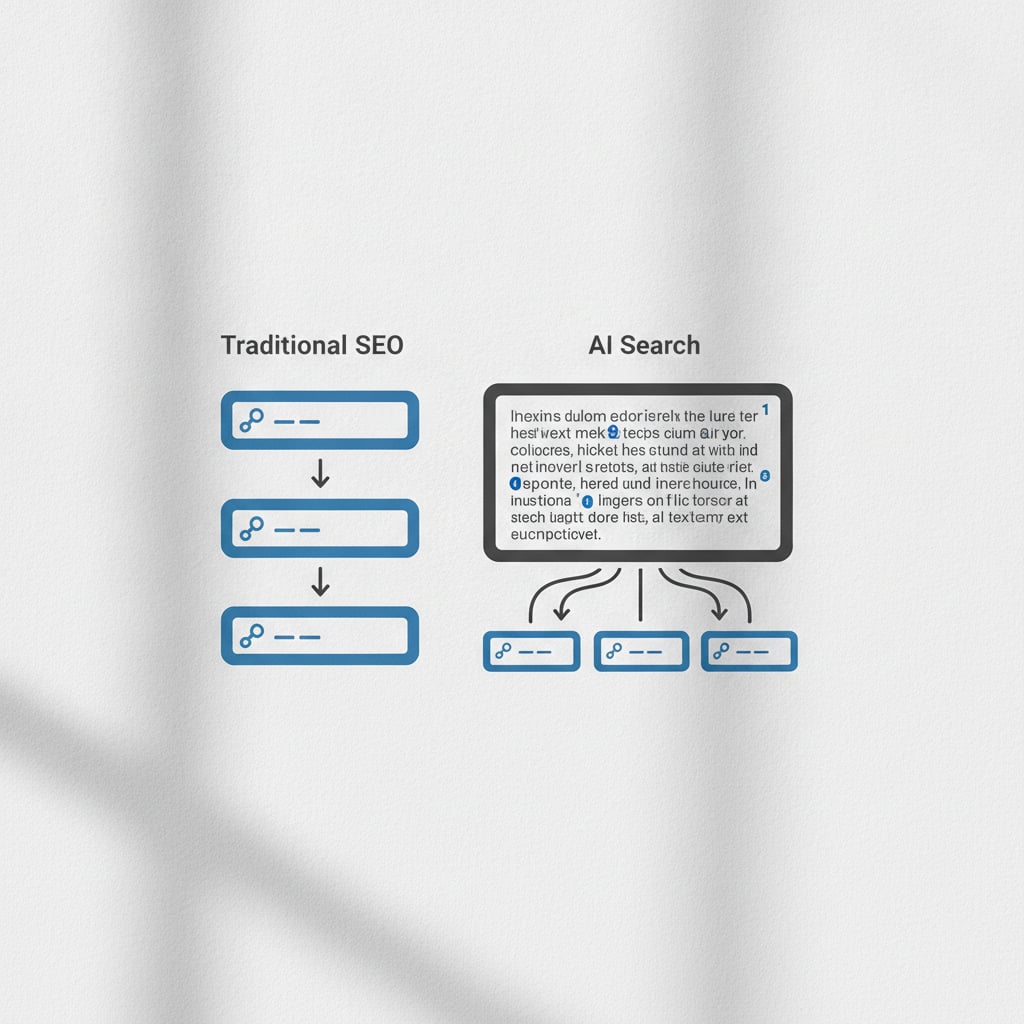
AI engines synthesize sources into a single generated answer rather than returning a list of links for the user to evaluate.
When someone types a question into ChatGPT or Perplexity, the engine pulls from indexed content, weighs it, and produces a response. Your page might be one of the sources it draws from. Or it might not.
Traditional SEO optimizes for position in a list. AI content optimization targets inclusion in a synthesis. The mechanics are related but not identical.
A page can rank on page one of Google for a keyword and still be absent from every AI answer for the equivalent question. We see this pattern repeatedly in our broader dataset of 85 stored answers across 22 buyer questions. Ranking and being cited are two different outcomes that require overlapping but distinct strategies.
How to Optimize Content for AI Search Engines: The Core Mechanics
The 15 answers we collected reveal three structural signals the engines consistently reward. These are not theoretical. They are patterns visible in the content the engines chose to synthesize.
1. Direct, liftable statements
Every engine answer we recorded contained compressed, declarative claims. The kind of sentence an engine can extract whole and present as fact.
Content that buries its point under three paragraphs of context does not get synthesized. The engines favor pages that state the answer first, then elaborate. Bold claims, clear definitions, and one-sentence summaries placed early in a section give the engine something concrete to work with.
This is not new writing advice. But in the AI answer context, it is structurally critical. A page that meanders to its conclusion may still rank in traditional search. It is far less likely to be quoted in an AI answer.
2. Structured, question-shaped headings
The engines we queried returned answers organized around sub-questions. The source pages they drew from used heading structures that mirrored how people ask questions.
If your H2 reads "Our Methodology" the engine has to work to figure out what question that section answers. If your H2 reads "How does AI search differ from traditional SEO?" the engine can map it directly to a user query.
Question-shaped headings act as retrieval hooks. They tell the engine exactly which user intent a section satisfies.
3. Specific, verifiable data points
Generic advice is everywhere. The engines do not need another page saying "create high-quality content." They need pages that contain specific numbers, named comparisons, and verifiable claims.
In our dataset, the pages most frequently cited as sources across the broader 85-answer pool share one trait: they contain data that cannot be found elsewhere. Original research, proprietary benchmarks, specific pricing, concrete case details.
"$99 per month for AI visibility tracking" is citable. "Affordable pricing" is not.
The Demand Signal Is Real and Growing
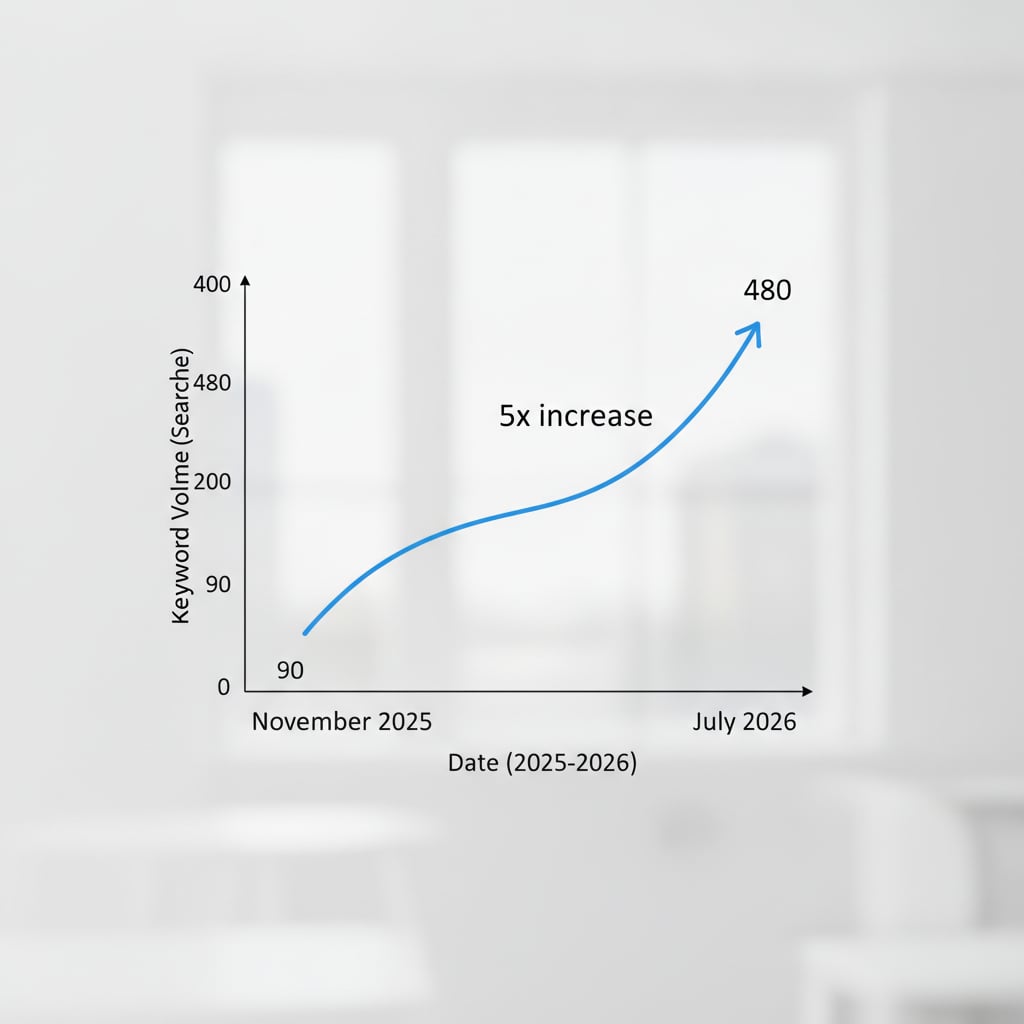
The search query "how to optimize content for AI search" hit 480 monthly searches in July 2026, up from 90 in November 2025. That is a 5x increase in eight months.
The commercial cluster around "AI content optimization" carries a strong average CPC, which signals that advertisers already value this intent. But competition density remains low, with a competition index under 5 across the four keyword variants we track. This is an almost uncontested space in organic search.
For content creators and SaaS companies, this is a narrow window. The topic has real buyer intent, growing volume, and very few authoritative pages competing for it. Publishing primary research now, while the space is thin, is how you become the source the engines cite later.
What Zero Brand Visibility Means for This Query
Across the 15 answers we collected for this specific query, zero tools were named unprompted by any of the four engines.
For the full cross-question breakdown of which tools appear across all 22 buyer questions we track, see our AI visibility tracking tools roundup.
The absence here is notable. It means no company has yet established itself as the default authority on AI content optimization in the eyes of the engines themselves. Every answer returned general tactics. None pointed to a specific platform, framework, or methodology by name.
This is the gap. The first brand to produce consistently cited, data-rich content on this topic has a real shot at becoming the source the engines reference. That is not speculation. It is the pattern we observe across our full dataset: brands that appear in AI answers got there by being the primary source for specific, verifiable claims.
What Does Not Work
A few patterns are conspicuously absent from the content the engines chose to synthesize:
- Listicles without original data. "Top 10 tips for AI SEO" pages were not cited in any of the 15 answers unless they contained specific, novel information.
- Content that only links to other sources. Aggregation without analysis does not get synthesized. The engines want the primary claim, not the page that points to it.
- Keyword-stuffed pages. Traditional keyword density tactics are irrelevant to how AI engines select sources. The engines parse meaning, not keyword frequency.
FAQ
How is optimizing your content for inclusion in AI search answers different from traditional SEO?
Traditional SEO targets ranking position in a list of links. AI content optimization targets inclusion in a synthesized answer. A page can rank first on Google and still be absent from every AI engine answer for the same query. The structural requirements overlap (clear headings, authoritative content, fast-loading pages) but the output is different: you are optimizing to be quoted, not just clicked.
What content formats perform best in AI search answers?
Based on the 15 answers we collected, the engines favor content with direct statements early in each section, question-shaped headings that map to user intent, and specific data points that can be verified. Pages structured as Q&A or organized around sub-questions were more likely to be drawn from than pages using abstract or branded section headers.
Can I track whether my content appears in AI search answers?
Yes. Several tools now offer AI visibility tracking across engines like ChatGPT, Claude, Gemini, and Perplexity. Pricing ranges from $20/mo to $199/mo depending on the platform and plan. Our tools roundup at /blog/best-ai-visibility-tracking-tools-3 covers the full landscape with current pricing and cross-engine citation data.
How fast is demand growing for AI content optimization?
The query "how to optimize content for AI search" grew from 90 monthly searches in November 2025 to 480 in July 2026. The commercial cluster carries a strong average CPC, indicating strong buyer intent despite low organic competition.
---
The data in this article comes from SeeMySaas, which tracks AI visibility across ChatGPT, Claude, Gemini, and Perplexity for $99/mo, cancel anytime. If you want to see how your brand appears (or doesn't) in AI answers, you can start at seemysaas.com.